Apply for IPOs online, in a few clicks
An IPO is one of the favourite choices for investors. Apply for an IPO through the PCJ portal or the PCJ Invest app.
 Scan to apply for IPOsUPI / ASBA — money stays in your bank
Your IPO journey in 5 steps
Be part of a company’s public debut
An Initial Public Offering (IPO) is the process of listing a private company on the public market — most commonly to raise funds. Investors get access to shares of the company, and if the price rises after listing, there is potential for returns.
IPO investment can be done through the PCJ app or website. Before investing, you must open a Demat account to hold your shares. Add the required funds to your trading app, then select your bid and the number of lots you wish to apply for.
IPO issues are made under SEBI guidelines. Investing in an IPO comes with both risks and rewards — study the company’s performance and prospects before investing. When applying there is no need to issue cheques; simply authorise your bank via UPI/ASBA and the money stays in your account until allotment.
- One-click IPO applications
- UPI / ASBA — no cheques needed
- Money stays in your account till allotment
- Requires a Demat & bank account
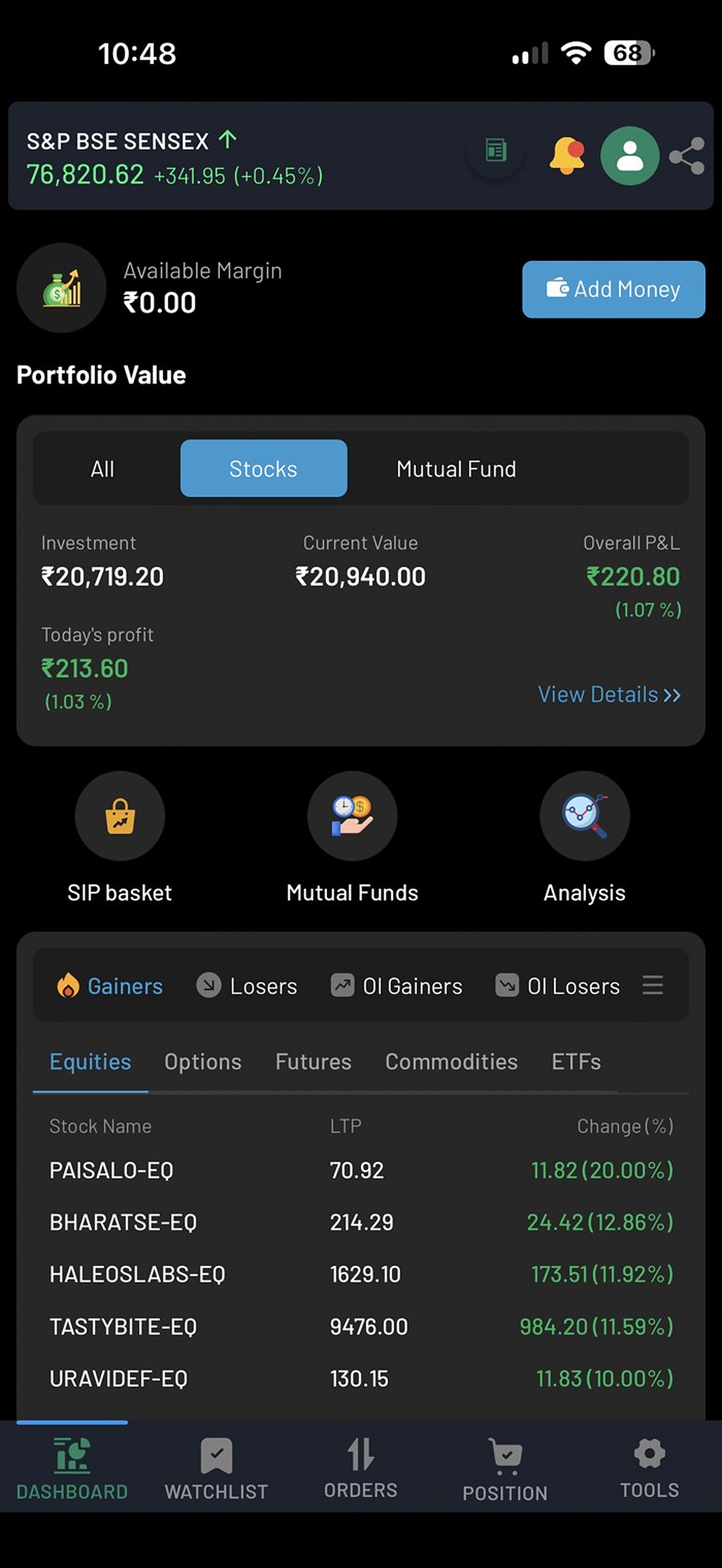
Understanding IPO in detail
How an IPO works
A company offers its shares to the public to raise capital and list on the exchange. Most IPOs use a price band and a book-building process; you place a bid within the band, in multiples of the lot size, during the open window.
How to apply with PCJ
Add funds, select the IPO, choose your bid and the number of lots, and authorise the application via UPI or ASBA. The amount is blocked — not debited — until allotment. If you are not allotted shares, the block is simply released.
Categories & allotment
Retail, Non-Institutional (HNI/NII) and Qualified Institutional Buyer (QIB) categories each have separate quotas. When a retail issue is oversubscribed, allotment may be done by lottery — allotment is never guaranteed.
Before you apply
Read the Red Herring Prospectus (RHP) to understand the business, financials and risks. Listing gains are not assured, so apply on the merits of the company rather than on hype.
Understanding IPO
Book building
Most IPOs use a price band; you bid within it in fixed lot sizes.
Categories
Retail, Non-Institutional (HNI) and Qualified Institutional Buyers each have separate quotas.
Listing day
Shares list on the exchange; gains or losses depend on demand and issue pricing.
Why Apply for IPOs with PCJ
One-Click Apply
Apply from any platform or the app.
UPI / ASBA
Simple, secure payment authorisation.
Status & Allotment
Track your application and allotment.
SEBI-Regulated
IPO issues under SEBI guidelines.
Tools You Get With PCJ
Strategy Builder
Build option strategies with pay-off charts & Greeks.
Market Depth
Live bid/ask, 52-week range, volume & OI.
Basket & SIP
Order multiple stocks or set SIPs in one go.
Smart Alerts
Price alerts so you never miss a move.
Charts & Data
30 years of history, ratios & indicators.
Safe & Secure
NSDL demat, OTP-based pledges & alerts.
IPO vs Secondary Market
IPO
When — At the time of listing
Price — Fixed price / band
How to apply — UPI / ASBA
Allotment — Subject to demand
Secondary market
When — Any trading day
Price — Live market price
How to apply — Buy order
Allotment — Instant, if liquid
Begin in Three Simple Steps
Open your account
Complete a 100% online, paperless Demat & Trading account in about 10 minutes.
Meet your RM
Get a dedicated Relationship Manager for guidance and service support.
Apply to an IPO
Select an open IPO, enter your bid, choose lots, and authorise via UPI.
IPO — Frequently Asked Questions
Add funds, select the IPO, choose your bid and lots, and authorise via UPI/ASBA — no cheques needed; funds stay in your account until allotment.
Yes — allotted shares are credited to your Demat account, so a Demat & bank account are required.
No. Allotment depends on subscription and SEBI’s allotment process; research the company before applying.
The price band is the range you bid within; the lot size is the minimum number of shares you must apply for.
The Red Herring Prospectus — the offer document containing the company's business, financials and risks. Read it before applying.
Allotment is finalised after the issue closes; blocked funds are released for unallotted applications as per the published timeline.
Open the PCJ IPO portal (linked from this page or the IPO tab in the utility bar), pick the issue, choose your lots and bid price, and approve the UPI mandate that appears in your UPI app. Your money stays blocked in your own bank account — it leaves only if you receive an allotment. The entire application takes a few minutes.
ASBA means Application Supported by Blocked Amount. Instead of paying upfront, your bank simply blocks the application amount in your own account. If you get the allotment, the exact amount is debited; if not, the block is released automatically. It is the safest application method and is mandatory for retail IPO applications in India.
The price band is the range within which you can bid, for example ₹95 to ₹100 per share. The lot size is the minimum number of shares you must apply for, and you can only apply in multiples of it. Retail investors can apply up to ₹2 lakh per IPO application.
Under the current SEBI timeline, allotment is finalised within a few working days of the issue closing. If you are allotted, shares are credited to your demat account and the blocked amount is debited; if not, the block on your bank account is released. The stock then lists on NSE and BSE, and you can sell from the listing day onwards if you wish.
No. Listing gains are possible but never guaranteed — stocks can list below the issue price too. Read the company's RHP (Red Herring Prospectus), understand what the business does, how profitable it is and how the price compares with listed peers. Apply because you like the business, not just the buzz.
Opening an account with PCJ is 100% online and paperless. Keep your PAN card, Aadhaar (linked to your mobile number) and a cancelled cheque or bank statement ready. Fill the eKYC form at ekyc.pcjholdings.in, upload the documents, complete a quick selfie verification and e-sign with your Aadhaar OTP. The whole process takes about 15 minutes, and your account is usually activated within 24 to 48 working hours. A dedicated Relationship Manager is assigned to help you from day one.
You need just three things: your PAN card, your Aadhaar card linked to your mobile number (for OTP-based e-sign), and a bank proof such as a cancelled cheque or a recent bank statement. If you want to trade in futures and options, commodities or currency, you may also need an income proof such as a salary slip, bank statement of the last six months, or your latest ITR acknowledgement — this is a SEBI requirement for derivative segments.
The online form itself takes about 15 minutes. After you e-sign, our team verifies your documents and your account is typically activated within 24 to 48 working hours. You will receive your client code and login details by email and SMS as soon as the account is live.
Please see our Pricing page for the current account opening and annual maintenance charges — we keep the schedule transparent and updated there. Your Relationship Manager will also explain every charge before you begin, so there are no surprises later.
Yes, Non-Resident Indians can invest in Indian markets through the proper NRI route, which needs an NRE or NRO bank account and a few extra documents such as your passport and overseas address proof. The process has more steps than a resident account, so the easiest way is to request a call back — our team will guide you end to end.
Yes. You can open a new account with PCJ and transfer your existing holdings from your old broker. Shares move from demat to demat without selling, so there is no tax event on the transfer itself. Our team helps you with the closure-cum-transfer form of your old depository participant so the shift is smooth.
Yes. PCJ Holdings is a SEBI-registered stock broker and a depository participant with NSDL, and a member of NSE, BSE and MCX since 2006. Your shares are not held by us — they sit in your own demat account with the depository (NSDL) in your name. Your funds are kept in client bank accounts that are separate from the company's own money, as SEBI rules require. Exchanges also run regular inspections of every member broker.
Related Products & Services
Ready to begin your PCJ journey?
Open a 100% online Demat & Trading account, or book a private consultation with a dedicated Relationship Manager.