Diversification that trades like a stock
An Exchange-Traded Fund (ETF) is a basket of securities — such as an index, gold or a sector — that trades on the exchange throughout the day, just like a share. ETFs typically carry low expense ratios, making them a cost-effective way to diversify.
With PCJ you can invest in ETFs at ₹0 brokerage and hold them safely in your NSDL demat account, combining low cost with the flexibility of live trading.
- Index, gold & sector ETFs
- ₹0 brokerage on ETF investing
- Trade throughout market hours
- Held safely in your demat account
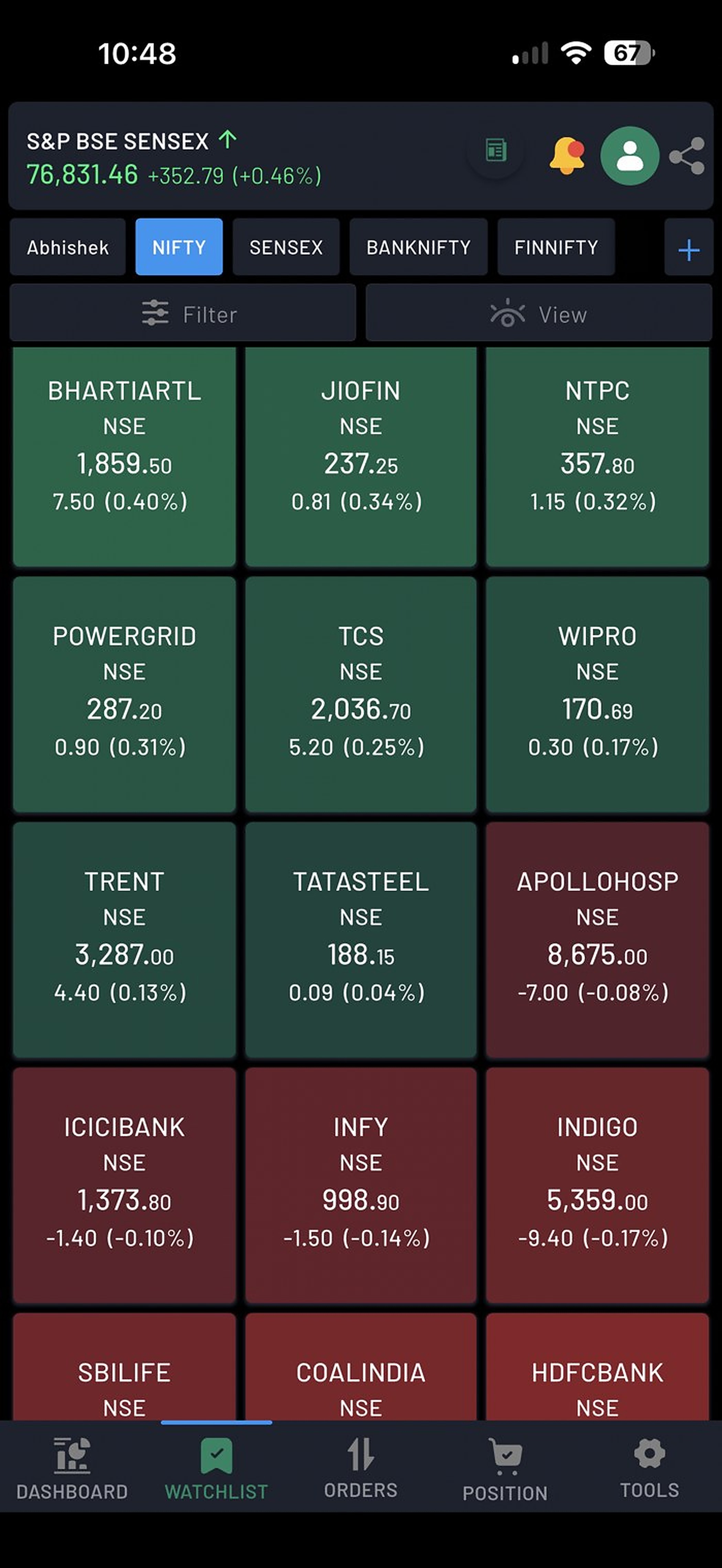
Understanding ETF in detail
How ETFs work
An Exchange-Traded Fund is a basket of securities — an index, gold, or a sector — that lists and trades on the exchange like a share, throughout the day, at live prices. You hold the units in your demat account.
Why investors like ETFs
Low expense ratios, instant diversification, transparency (you can see the holdings), and intraday liquidity make ETFs a popular, cost-effective building block.
Types of ETFs
Index ETFs (e.g., Nifty 50, Sensex), Gold ETFs, Sector / Thematic ETFs, and Debt / Liquid ETFs.
Things to check
Before buying, look at the expense ratio, the tracking error (how closely the ETF follows its index), and on-exchange liquidity.
Understanding ETF
Index ETFs
Track an index like the Nifty 50 for broad, low-cost market exposure.
Gold ETFs
Get exposure to gold prices without holding physical gold.
Sector & Thematic
Focus on a specific sector or theme in a single, tradable unit.
Why Invest in ETFs with PCJ
₹0 Brokerage
Invest in ETFs at zero brokerage.
Trade Live
Buy and sell during market hours.
Low Cost
Generally low expense ratios.
Safe Custody
Held in your NSDL demat.
Tools You Get With PCJ
Strategy Builder
Build option strategies with pay-off charts & Greeks.
Market Depth
Live bid/ask, 52-week range, volume & OI.
Basket & SIP
Order multiple stocks or set SIPs in one go.
Smart Alerts
Price alerts so you never miss a move.
Charts & Data
30 years of history, ratios & indicators.
Safe & Secure
NSDL demat, OTP-based pledges & alerts.
ETF vs Mutual Fund
ETF
Mutual Fund
Begin in Three Simple Steps
Open your account
Complete a 100% online, paperless Demat & Trading account in about 10 minutes.
Meet your RM
Get a dedicated Relationship Manager for guidance and service support.
Start with ETFs
Choose an ETF, review it, and buy it like any share.
ETF — Frequently Asked Questions
An ETF trades on the exchange throughout the day like a stock, usually with lower expense ratios; a mutual fund is bought/sold at end-of-day NAV.
Yes — PCJ offers ₹0 brokerage on ETF investing. Statutory levies still apply at actuals.
Safely in your NSDL Demat account.
A measure of how closely an ETF follows its underlying index — lower tracking error is better.
Some ETFs distribute dividends while others reinvest them — check the scheme details.
Yes — since ETFs trade on the exchange, units are held in your demat account.
A SIP, or Systematic Investment Plan, invests a fixed amount into a mutual fund every month automatically. Because you invest the same amount at different prices, you naturally buy more units when markets are cheap and fewer when they are expensive — this is called rupee-cost averaging. Over the years, SIPs turn small monthly savings into meaningful wealth through compounding.
Yes. SIPs are completely flexible — you can pause, stop, increase or decrease them without penalty. An SIP is not a lock-in (except tax-saving ELSS funds, which have a three-year lock-in per instalment). That said, SIPs work best when you let them run through market ups and downs.
Mutual funds are regulated by SEBI and your units are held in your name with the fund's registrar. 'Safe' depends on the type of fund: liquid and debt funds are steadier, while equity funds move with the market and are meant for long horizons. Mutual fund investments are subject to market risks — always read the scheme documents, and match the fund to your goal and time frame.
NAV is the per-unit price of a mutual fund, declared daily. A ₹10 NAV fund is not cheaper or better than a ₹100 NAV fund — your returns depend only on how much the fund's portfolio grows after you invest, not on the NAV number itself. Choose funds by strategy, quality and track record, not NAV.
PCJ Holdings is an AMFI-registered mutual fund distributor (ARN-63632). We help you choose schemes, set up SIPs and track everything in the PCJ Wealth app, with a Relationship Manager to guide you. The funds themselves are managed by SEBI-regulated asset management companies, and your units are always in your name.
A fund's advertised return assumes one lump-sum investment, but your SIP invests every month, so each instalment has a different journey. XIRR is the correct measure for SIPs — it accounts for the timing of every payment. The PCJ Wealth app shows your XIRR so you always see your true personal return.
Related Products & Services
Ready to begin your PCJ journey?
Open a 100% online Demat & Trading account, or book a private consultation with a dedicated Relationship Manager.